

The Cost of Waiting: Why Sewage Flooding and Mold Can't Sit on Your To-Do List
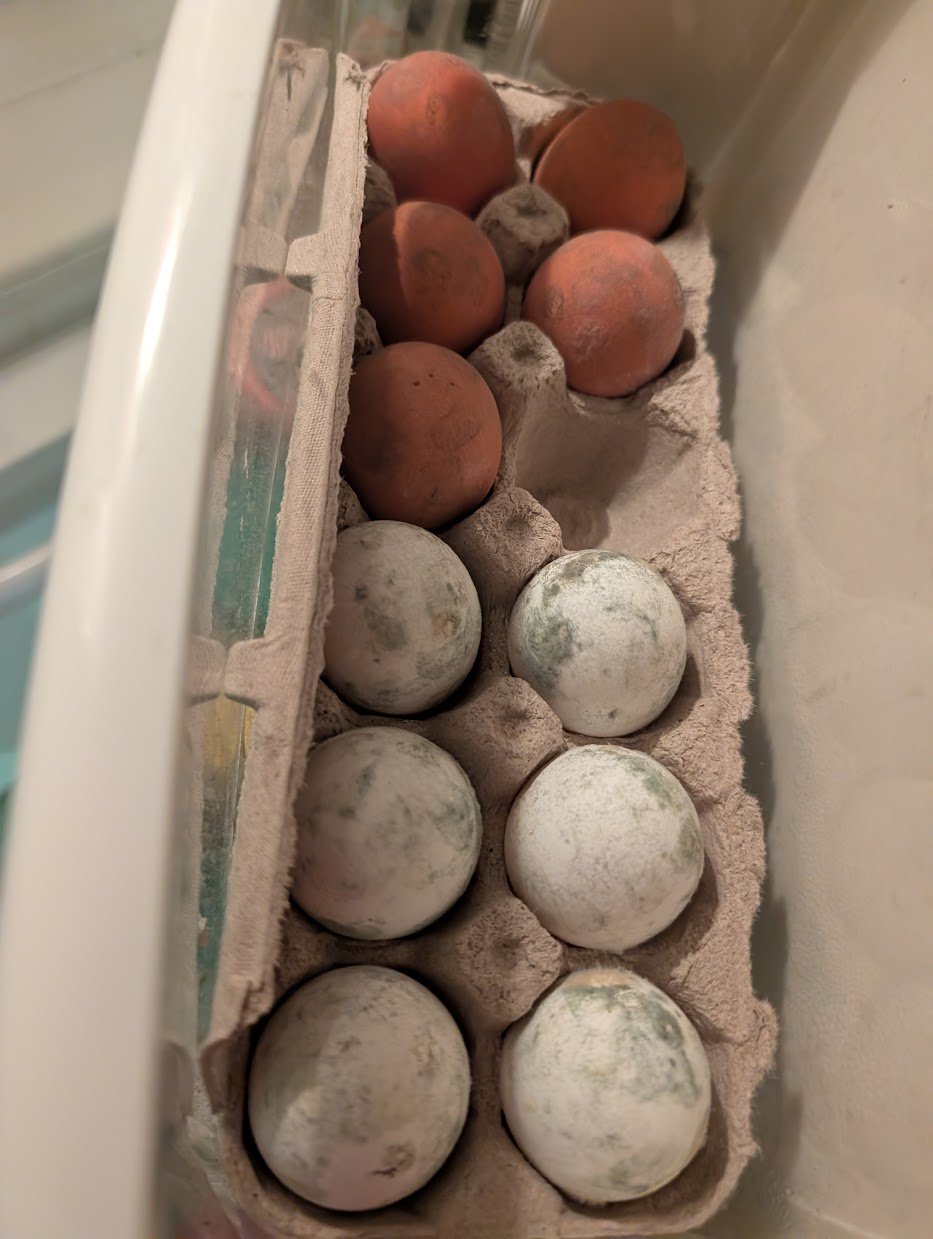
Eggs covered in green mold.
On July 1st, Ottawa received 118 millimetres of rain in a single day — one of the worst flooding events the city has seen in 25 years. By the time the water receded, more than 6,000 basements across the city had flooded. Mayor Mark Sutcliffe noted that this storm caused more than double the property damage of the 2019 Ottawa River flood, which itself displaced around 2,000 homes. Ottawa Fire Services responded to over 700 calls about downed wires and electrical hazards in flooded basements alone.
Ours was one of them.
The full basement of Project Fresh Air — 1,200 square feet — went under. My office. The laundry room. The mechanical room. And the one-bedroom apartment we built for a family member to live in.
That last one is the part that still catches in my throat. This wasn't just storage or a rec room. It was someone's home.
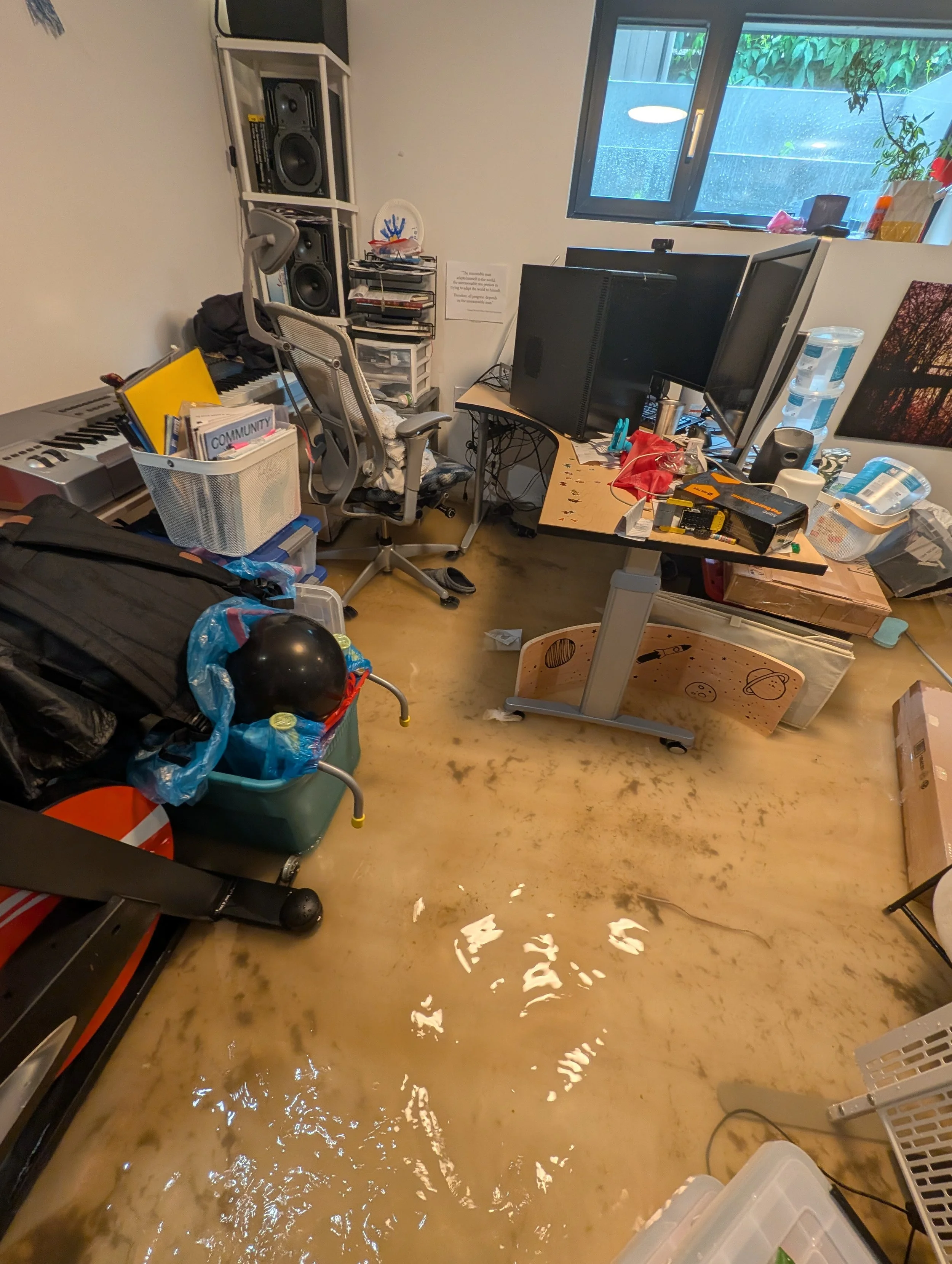
The Water Was Never Just Water
When people picture a flooded basement, they picture water. What they don't picture is what's actually in it.
This was Category 3 water — contaminated with sewage. Bacteria. Viruses. Whatever the storm pushed backward through the pipes and into our home. It doesn't announce itself as dangerous. It looks like any other flood. It behaves like any other flood.
But it is not safe to walk through, touch, or breathe around without protection.
And unlike a lot of home damage, this kind doesn't wait politely for you to have capacity to deal with it. It moves. It multiplies. It gets worse by the hour, not the week.
Mold Doesn't Ask If You're Ready
Mold can begin colonizing damp materials within 24 to 48 hours. In a basement — dark, humid, full of porous materials like drywall, insulation, and carpet — that clock starts the moment the water sits still.
We watched growth appear fast. Faster than felt real. We weren't alone — other Ottawa homeowners affected by this same storm reported visible mold, in some cases a fluffy orange and white growth, within days of the water receding, forcing at least one family out of their home entirely while they navigated repairs.
This is where I think a lot of people, myself included in that first disoriented day, underestimate the situation. A flood feels like a cleanup problem. It is actually a health and structural problem wearing a cleanup problem's clothes.
The health effects are not hypothetical.
Sewage exposure carries real risk of gastrointestinal illness, skin and eye irritation, and infection, especially through any open cut or mucous membrane. Mold exposure — particularly in the volume and speed we're talking about after a black water flood — can trigger respiratory symptoms, worsen asthma, and affect anyone with compromised immunity or existing chronic illness far more seriously than it affects a resilient nervous system on a good day.
For a household like ours, where accessibility and chronic health conditions are already part of daily life, that risk isn't background noise. It's foreground.
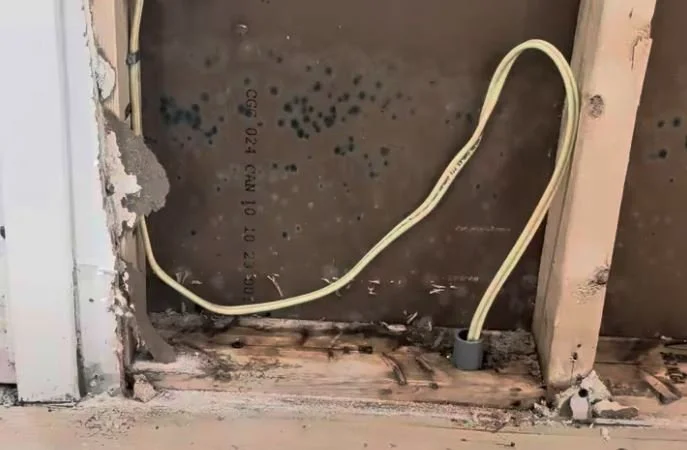
Mold growing inside the drywall.
The Structure Doesn't Wait Either
Mechanical rooms hold the systems that keep a home running — electrical, heating, water. Water and sewage contamination in that space isn't just a mess to mop up; it's a system that may no longer be safe to operate until it's been assessed.
Drywall wicks moisture upward, often well above the visible waterline. Insulation, once wet, rarely dries the way people hope. Subfloor and framing can begin to suffer structurally long before anyone notices a smell or a stain.
The damage that isn't visible yet is often the damage that matters most.
It's also worth knowing the scale of what's at stake financially. The Insurance Bureau of Canada has reported that water damage has now replaced fire as the leading cause of home insurance losses in Ontario, and sewer backup claims are climbing as older infrastructure meets increasingly intense storms. A moderate basement flood typically runs $10,000 to $25,000 in Ontario; when sewage contamination requires full decontamination alongside structural repair, that figure can climb past $40,000 to $60,000. The longer contaminated materials sit, the more of that range you tend to land in.
The Appliances That Seem Fine Often Aren't
Our insurance inspector warned us about this early on, and I didn't fully appreciate it until it happened to us: an appliance that was exposed to floodwater can look and even run fine for days or weeks before it fails.
Our fridge was one of the items we thought we'd saved. It survived the initial flood, the compressor kept running, and it seemed like a genuine win in the middle of a lot of loss. Then the compressor failed — a direct result of the earlier water exposure — and by the time we caught it, the entire interior was filled with mold.
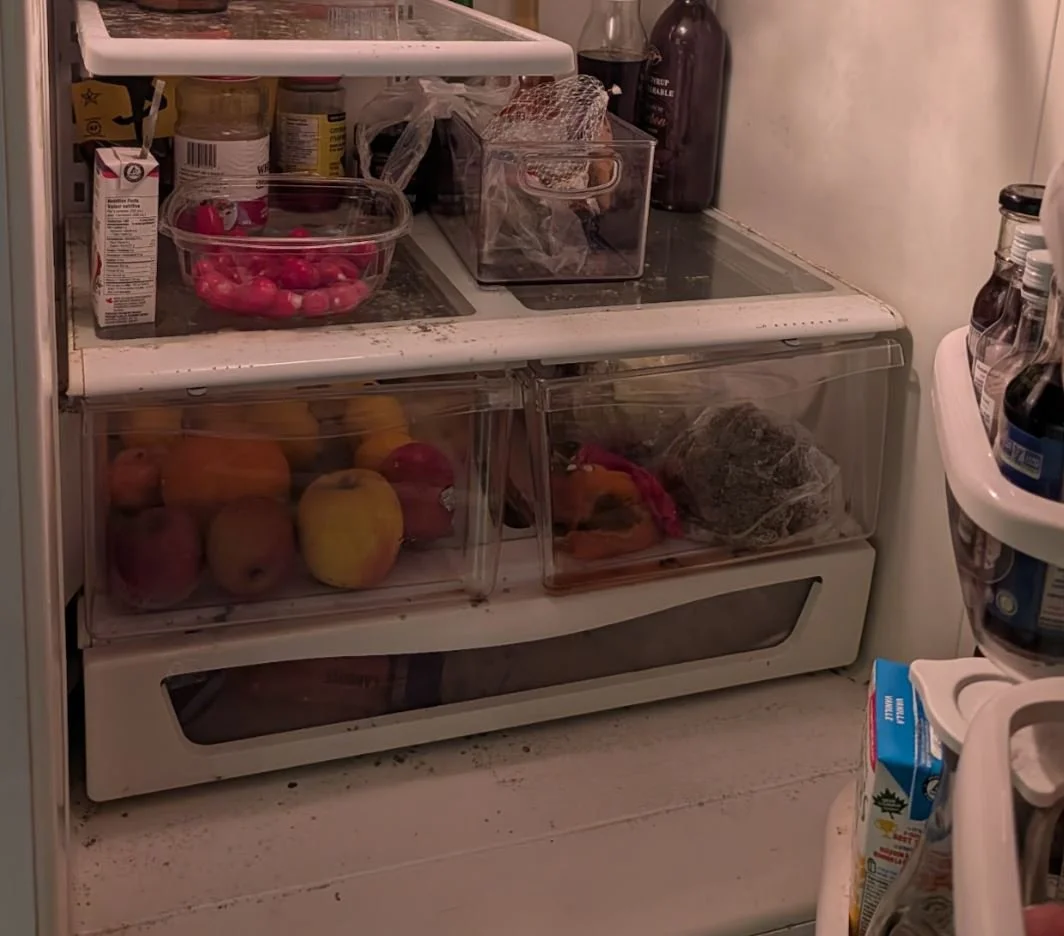
Mold inside fridge.
This is worth sitting with, because it runs counter to instinct. When something still works, it's easy to assume it survived. But water exposure can damage internal components — seals, wiring, motors, compressors — in ways that take time to show up as failure. An appliance that seems like a success story on day three can become a health hazard on day twenty, with no warning in between.
If anything in your home was touched by floodwater, even if it's currently running normally, it's worth asking your insurance inspector and a qualified technician whether it's actually safe to keep, rather than assuming that "it still works" means "it's fine."
Why Urgency Isn't Alarmism
I want to be careful here, because I don't believe in fear-based advice. But I also don't believe in downplaying what this actually is.
A sewage flood with active mold growth is not a project you get to when you have the energy for it. It is not something you triage behind work emails and school pickups and everything else that doesn't pause for a disaster.
It is urgent in the truest sense: the longer contaminated materials and active mold sit in a home, the more they compound — health risk compounding structural risk, structural risk compounding cost, cost compounding the emotional weight of a family already displaced from part of their home.
We didn't fully understand that in the first 24 hours. I'm writing this so that if this happens to you, you do.
Homes are supposed to be the place that holds us steady. When the water recedes and what's left behind is contamination and mold, the most caring thing you can do for your family — and for the people living under your roof who are counting on that home — is to treat it with the urgency it actually deserves.
In the next post, I'll walk through exactly what to do first: the safety steps, the calls to make, and the small list of supplies that made a real difference for us once it was safe to go back down.