

What to Do First: A Practical Guide After a Sewage Flood
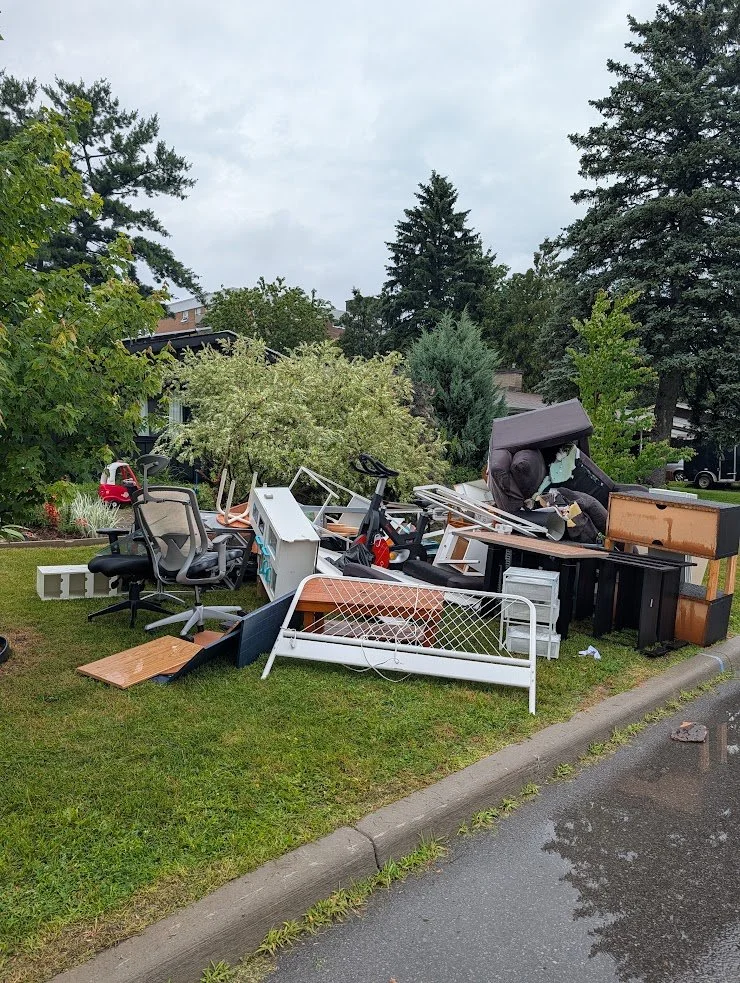
A pile of contaminated belongings from the basement.
When the water receded in our basement after the July 1st storm, our instinct was to move fast. To save things. To get down there and start pulling what mattered out of the wreckage.
That instinct was right. The way we acted on it was not.
We went in without rubber boots. We handled our phones with bare hands to document the damage, not realizing we were transferring contamination onto something we'd be touching for the rest of the day. We were reacting, not preparing.
If I could go back and hand myself one thing before I walked down those stairs, it would be a list. So here it is.
Before You Touch Anything: Safety First
Category 3 water — the kind mixed with sewage — carries real risk of electrocution and contamination. Before you do anything else:
Stay out of standing water entirely if there is any chance electrical systems in the area are live. The City of Ottawa's own guidance is direct on this: do not enter a flooded area until a qualified professional has confirmed it's safe.
If the water has reached any outlet, electrical appliance, or your panel, contact Hydro Ottawa. If it's threatening gas-fired equipment like a furnace or water heater, contact Enbridge Gas. Don't try to assess this yourself.
Call your insurance company and the city as soon as possible. This was the very first thing we did, before we touched a single item, and it started the clock on support we needed.
Gear Up Before You Go Back Down
This is the list I wish someone had handed me on day one. Everything on it earned its place.
Rubber boots. Not optional. You will be standing in contamination, and you need a barrier between your skin and the floor.
Dish gloves — not disposable latex ones. You'll be documenting constantly: photographing damage, handling items, touching surfaces. Dish gloves pull on and off easily, which matters more than it sounds like it should — you'll be taking them off to use your phone for photos, then back on to keep working, over and over, all day. Disposable latex gloves tear and fumble under that kind of repeated use. Dish gloves hold up.
Alcohol wipes. For your phone. Even with gloves that come on and off easily, your hands will still touch a contaminated environment before you touch your phone. Wipe it down between uses. Don't let it become the thing that carries contamination back upstairs to the rest of your family.
Contractor-grade garbage bags. Standard bags will tear under wet, heavy, contaminated material. You need bags built for this.
Clear recycling bags — for salvageable items. This one matters more than it sounds like it should. In the chaos of a basement flood, it is very easy to accidentally throw out something that was actually fine — anything that was stored above the waterline, on a shelf, out of reach of the water itself. Clear bags let you and everyone helping you see at a glance what's been assessed as salvageable, so good items don't end up on the curb by mistake.
Bleach spray, cleaning wipes, and shop towels. For sanitizing surfaces, bins, and anything you're keeping.
Dehumidifier and fan. Get air moving the moment it's safe to be down there. Mold doesn't wait for you to finish sorting and documenting — it's working on that same 24-to-48-hour clock the whole time you are. Pulling moisture out of the air while you work is one of the few things that actively slows that clock down instead of just reacting to it later.
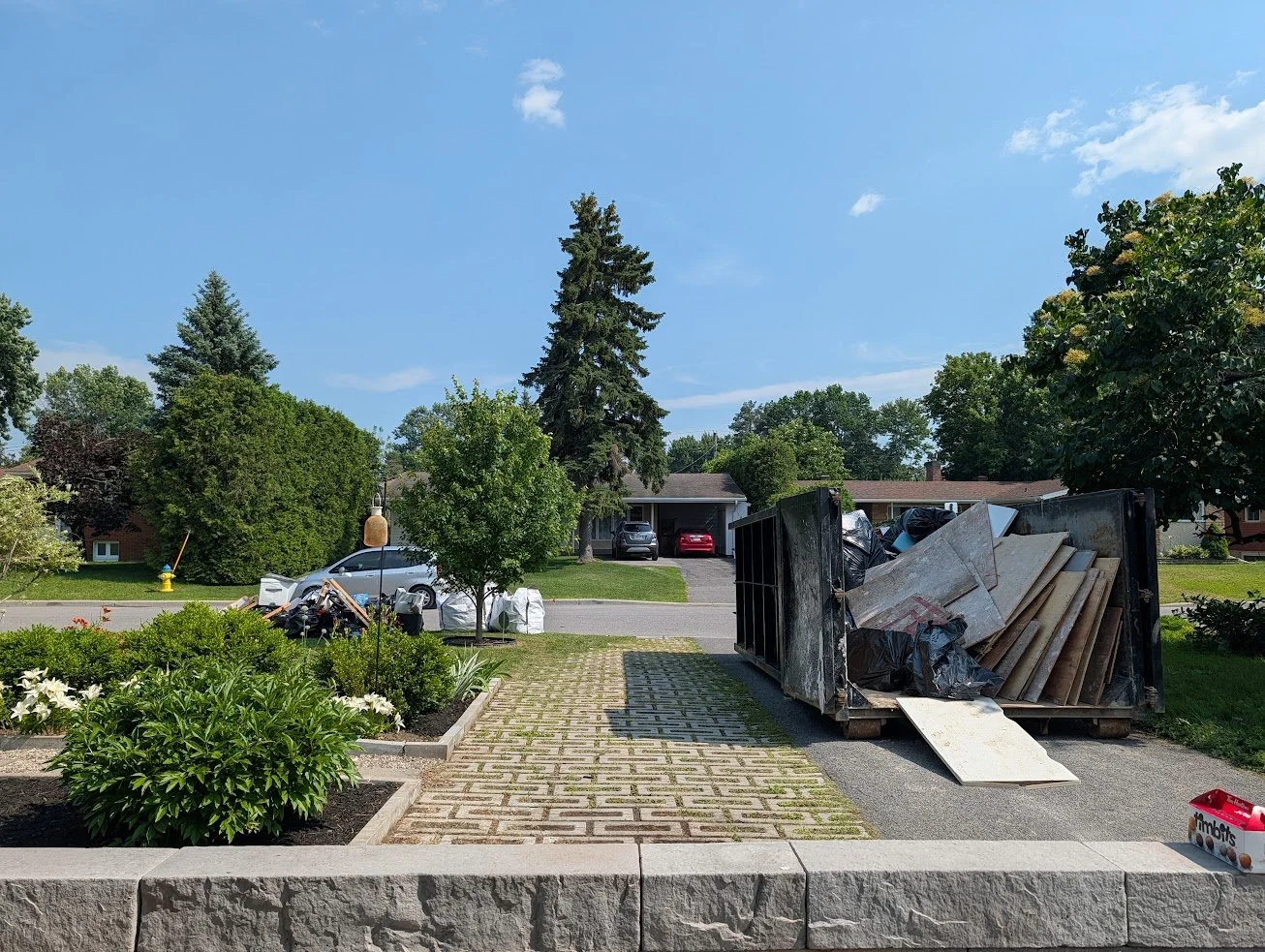
A dumpster full of the flooring, drywall and other damaged items. A pile of garbage is also visible.
The Detail Almost Everyone Misses: Check Inside Your Totes
We had several storage totes down there that we assumed were fine because they were sealed. Some of them had tipped over in the water, and water had leaked in through the seams anyway.
Don't assume a closed container kept its contents safe. Open every tote. Check the inside, not just the outside. Sanitize the tote itself before you trust it again, even if what's inside looks untouched.
Document As You Go, Not After
Photograph everything before you move or discard it — this is easier and far more thorough with clean, gloved hands and a wiped-down phone. Insurance claims move more smoothly when the documentation happens in real time, item by item, rather than reconstructed from memory later.
What Your Insurer Wants You to Know
After this storm, the Insurance Bureau of Canada put out guidance specifically for Ottawa residents. A few points from it are worth building into your process from the start, not after the fact:
Keep damaged items unless they pose a health hazard. Sewage-contaminated materials often do pose that hazard, which is why disposal is usually necessary — but this is exactly why documenting before you discard matters so much. If it's gone and undocumented, it's much harder to include in a claim.
Assemble proofs of purchase, photos, receipts, and warranties for what was lost, as you're able to.
Keep detailed notes throughout the process — dates, conversations, decisions made.
Keep every receipt related to cleanup. Supplies, contractors, disposal fees — all of it may be reimbursable.
Ask your insurance representative about Additional Living Expenses (ALE) if any part of your home is unlivable. This can cover alternate accommodations, which mattered enormously for us given that a family member's apartment was part of what flooded.
Know that sewer backup coverage is a separate, optional add-on in most Ontario policies — it isn't automatically included in standard home insurance. Confirming what your policy actually covers is worth doing early in the call with your insurer, not assumed.
Have every water-exposed appliance assessed, not just the ones that stopped working. We assumed our fridge was fine because it kept running — the compressor failed weeks later and the interior was full of mold by the time we caught it. Our insurance inspector actually warned us this could happen. Don't wait for something to fail before you ask a technician to look at it.
Call a Remediation Company — But Don't Let Their Schedule Be the Only Clock Running
A professional remediation company is the right call. They have the equipment, the protective gear, and the training to handle Category 3 water and mold safely and thoroughly — this isn't a place to cut corners if you can avoid it.
But here's the tension we ran into: remediation companies were in high demand across the entire city after this storm, and scheduling wasn't instant.
Don't remove or discard anything before your insurance company has completed their inspection. That documentation is what your claim is built on, and moving too fast can complicate it.
But once that inspection is done, the urgency doesn't pause for a remediation company's calendar. Mold and contaminated material don't wait for an appointment. If there's a gap between "insurance has seen it" and "the remediation crew arrives," that's the window to begin safe removal of the worst-affected, most time-sensitive materials yourself — with the gear above, and with everything documented — rather than leaving active contamination sitting for days or weeks.
The ideal order is: insurance inspects, then remediation begins. But when the ideal timeline isn't available and the clock is already running, safe, documented removal in the meantime is better than waiting for perfect.
What We Learned From the Indoor Air Quality Specialist
Even after the initial cleanup, we still had a lingering smell in the basement, so we brought in an indoor air quality specialist to walk through everything we'd done so far. What he told us reframed how I think about this whole process, and I wanted to pass it along.
His first point was about debris. All of it needs to come out, not just the obviously ruined materials. He specifically called out construction dust, things like wood dust left behind from any demolition or cutting during the cleanup, because that dust can harbour mold spores even when it looks like ordinary sawdust. This matches what the EPA's own mold remediation guidance actually says. HEPA vacuums are the standard tool for this kind of cleanup, and they're recommended specifically for the final pass after materials have been dried and the bulk of contaminated debris has already been removed, because a standard vacuum simply recirculates fine mold particles back into the air instead of capturing them. A sealed HEPA system is what actually holds those particles rather than redistributing them through the room.
He also talked about treating the concrete itself. Enzyme treatments are a recognized step here too. They work by breaking down organic contamination, the kind of residue sewage water and mold leave behind on a porous surface like concrete, in a way that plain surface cleaning doesn't fully reach. Once a surface has been cleaned and treated, encapsulation is the next layer of protection: a sealant applied over the treated material that locks in whatever residual spores might remain so they can't off-gas or spread further. Industry guidance under the IICRC S520 standard, the primary reference document for professional mold remediation, is clear that encapsulation is meant to follow proper cleaning and treatment, not replace it. Sealing over untreated mold just hides the problem rather than solving it, which is why the order he gave us mattered: treat first, then encapsulate.
The last thing he mentioned was actually reassuring. He told us that having spray foam insulation installed in parts of the basement was a good move, because fiberglass insulation behaves very differently in a flood. Fiberglass absorbs water and holds onto it, which means it stays wet for a long time and becomes exactly the kind of damp material mold prefers, often requiring full replacement after any real water exposure. Closed cell spray foam doesn't absorb water the same way. It's actually recognized by FEMA as flood resistant, able to survive direct contact with floodwater and be cleaned afterward rather than torn out and replaced. That distinction alone explains why some parts of our basement dried out and stabilized much faster than others.
Hearing all of this confirmed something I already suspected: this kind of cleanup isn't finished when the visible mess is gone. The debris you can't easily see, the surfaces you assume are "just concrete," and the materials behind your walls all keep doing something long after the water itself has receded, and a lingering smell is usually a sign that one of those things hasn't been fully addressed yet.
Quick Reference: What to Gather Before You Go Back Down
Rubber boots
Dish gloves (reusable, not disposable latex)
Alcohol wipes (for your phone)
Contractor-grade garbage bags
Clear recycling bags (for salvageable items)
Bleach spray
Cleaning wipes
Shop towels
Dehumidifier
Fan
A Note on Pace
Somewhere in the middle of that first day, exhausted and overwhelmed, I had to remind myself that this didn't all need to happen at once. Safety first. Documentation second. Sorting — salvage versus dispose — third. Everything else can follow once those three things are handled.
A flood asks a lot of a household very quickly. Having the right things in hand before you walk back down those stairs won't undo the damage. But it will mean you're protecting yourself, your documentation, and the things worth saving — instead of learning all of this, the way we did, one mistake at a time.
If you missed it, the first post in this series covers why this kind of damage — sewage contamination and mold — deserves urgency, not just eventual attention.