

Why Evaluation Comes Before Renovation
Why I Completed the Adaptive Home Certification
Before any renovation begins, there is a moment that often gets skipped.
It is the moment where we pause long enough to really understand how a home is working for the people who live in it. Not how it looks. Not what it could be one day. But how it supports daily life right now.
I recently completed my Adaptive Home Certification, and while the certificate is new, the thinking behind it is not. This training gave structure and clarity to a way of working I have been developing over many years as an interior architect and lighting designer. It also gave me the confidence to name something I already knew was missing from many renovation conversations.
Evaluation should come first.
This certification is the foundation for a new Home Evaluation Service I am launching through Floe Studio, and I want to explain why it matters, what it brings to my work, and how it can change the experience of renovating a home.
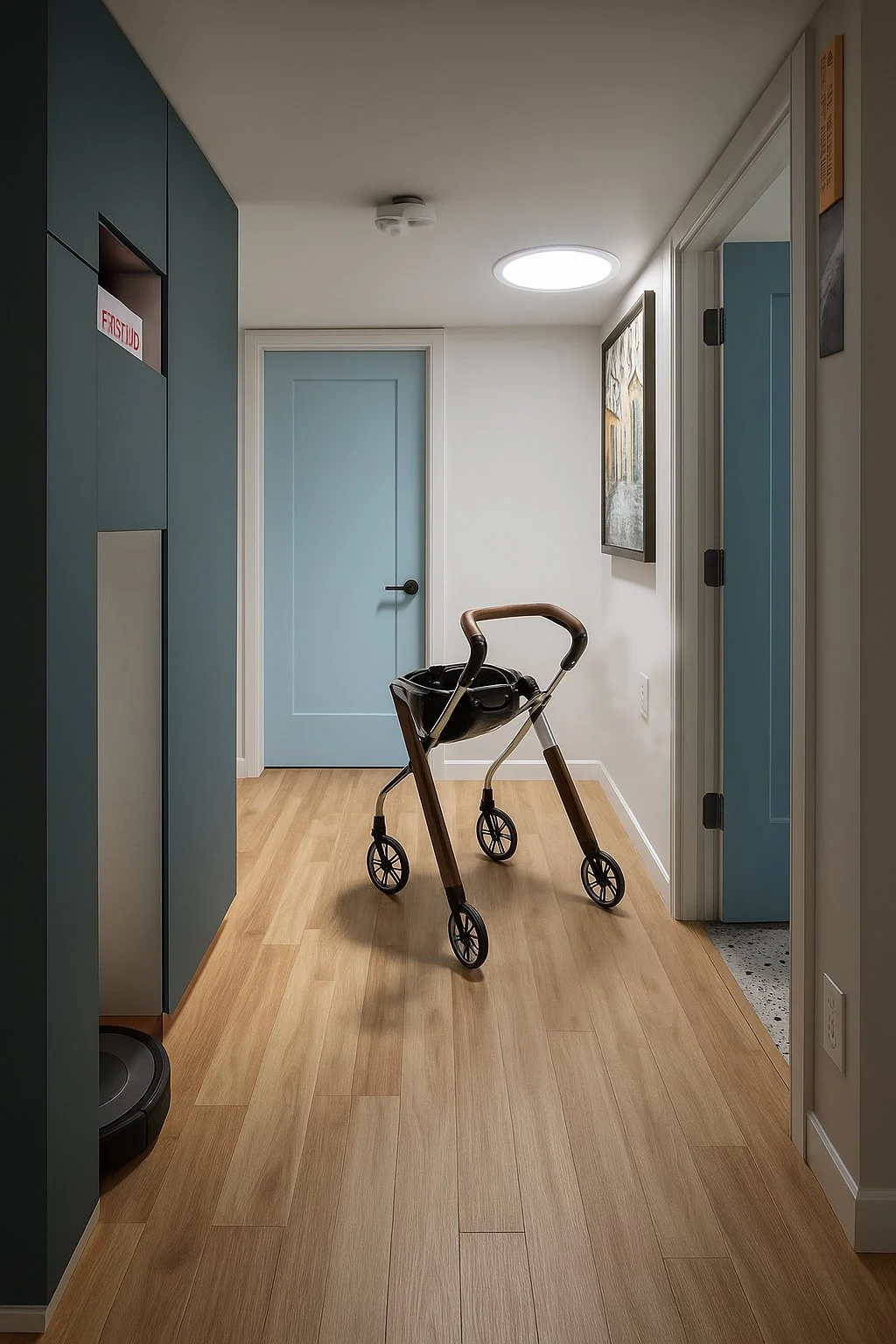
Hallway Access.
Every Space should Inspire and Support you.
What the Adaptive Home Certification Really Taught Me
At its core, the Adaptive Home Certification is about understanding how people actually live in their homes and how those homes support or strain them over time.
A key part of the process is listening.
Every evaluation begins with interviews with the people who live in the home. Not a generic questionnaire and not assumptions based on age or diagnosis. Real conversations about routines, habits, energy, pain, confidence, and change.
Questions like:
What feels easy in your home?
What feels exhausting?
Where do you slow down?
What do you avoid?
What worries you about staying here long term?
This is where the work becomes bespoke.
Rather than applying generic aging in place recommendations, the evaluation is shaped by lived experience. Two people of the same age in identical houses can have completely different needs. The certification reinforced that good design starts by respecting that truth.
From there, the training focuses on movement, sensory comfort, lighting, safety, and adaptability. Not as considerations for later, but as core elements of good design from the start.
Accessibility is not treated as a special category or a future problem. It is framed as thoughtful design that works better for everyone.
Why This Matters Right Now
Many homeowners come into renovations with beautiful inspiration images and a clear sense of what they want their home to look like. What they often lack is clarity about how their home is actually performing.
I regularly see kitchens that require far more standing, lifting, and reaching than people realize. Bathrooms that meet code but increase fatigue or fall risk. Lighting that looks good in photos but causes glare, eye strain, or sensory overload in daily life. Entryways that quietly erode confidence, especially in winter or at night.
When these issues are not identified early, renovations end up reinforcing the very problems people hoped to solve.
The Adaptive Home framework gives me a clear and defensible way to identify these challenges early, in direct conversation with the people affected, before design decisions are locked in and budgets are spent.
That timing matters. Renovations are expensive to undo. Needs often change faster than we expect. And many supportive design decisions are easiest and most affordable when they are planned at the beginning.
A home should actively support independence and wellbeing, not slowly chip away at it.
What This Adds to My Design Work
I already bring a deep understanding of space, flow, materials, and lighting to my projects. This certification strengthens that work in important ways.
First, it gives me a structured evaluation framework that combines spatial analysis with human insight. I am not just observing a space. I am translating lived experience into design strategy.
Second, it improves early decision making. When we understand both the home and the people in it, we can make clearer choices about what needs to change now, what can be prepared for later, and what should intentionally be left alone. This protects both budget and energy.
Third, it improves communication. Clear evaluation findings lead to better drawings, better conversations with builders and trades, and fewer compromises during construction. Everyone understands why a decision matters, not just what is being built.
Why Evaluation Should Come Before Renovation
Design does not start with finishes. It starts with understanding.
A proper home evaluation looks at how you enter and move through your home, how light behaves throughout the day, where physical or cognitive effort builds up, and how spaces support independence over time.
It also looks ahead, gently. Not from a place of fear, but from a place of preparedness. How can this home adapt if something changes? What decisions today will make tomorrow easier rather than harder?
This kind of evaluation is especially valuable if you are planning to age in place, living with a chronic or invisible condition, renovating after a health or life transition, or investing in what you hope will be a long term or forever home.
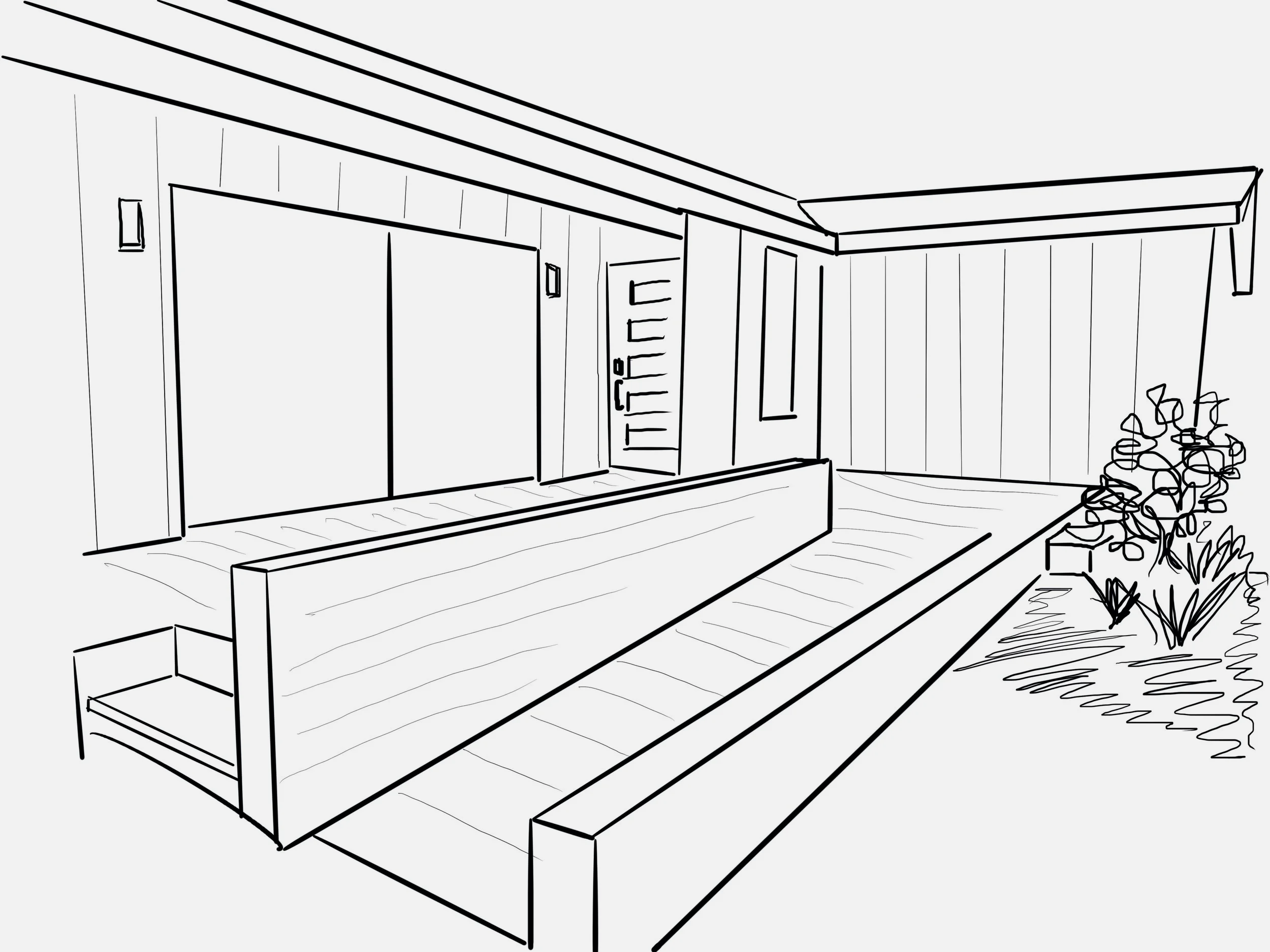
A line drawing of a ramp entrance
Introducing My Adaptive Home Evaluation Service
The Adaptive Home Certification allows me to formally offer a Home Evaluation Service that sits before design and construction and begins with listening.
The service includes interviews with the people living in the home, a walkthrough assessment of the existing space, identification of functional, lighting, and accessibility risks, and opportunities for low cost, high impact improvements. It also includes strategic recommendations for future renovations and a clear written summary that you can use with any designer or contractor.
This is not about pushing people into a full renovation. It is about giving clarity, confidence, and a plan that reflects real needs rather than generic advice.
Some clients will use this evaluation to move forward with a renovation. Others will use it to make small changes now and plan thoughtfully for later. Both outcomes are valid.
Thoughtful Homes Start With Listening
Good design is not just about how a space looks on day one. It is about how it supports you on tired days, difficult days, and changing days.
Completing the Adaptive Home Certification reinforced something I believe deeply and practice daily.
Homes should adapt to people, not the other way around.
If you are considering a renovation or simply want to understand how well your home is supporting you right now, this evaluation is a meaningful place to begin.
adaptiv home logo